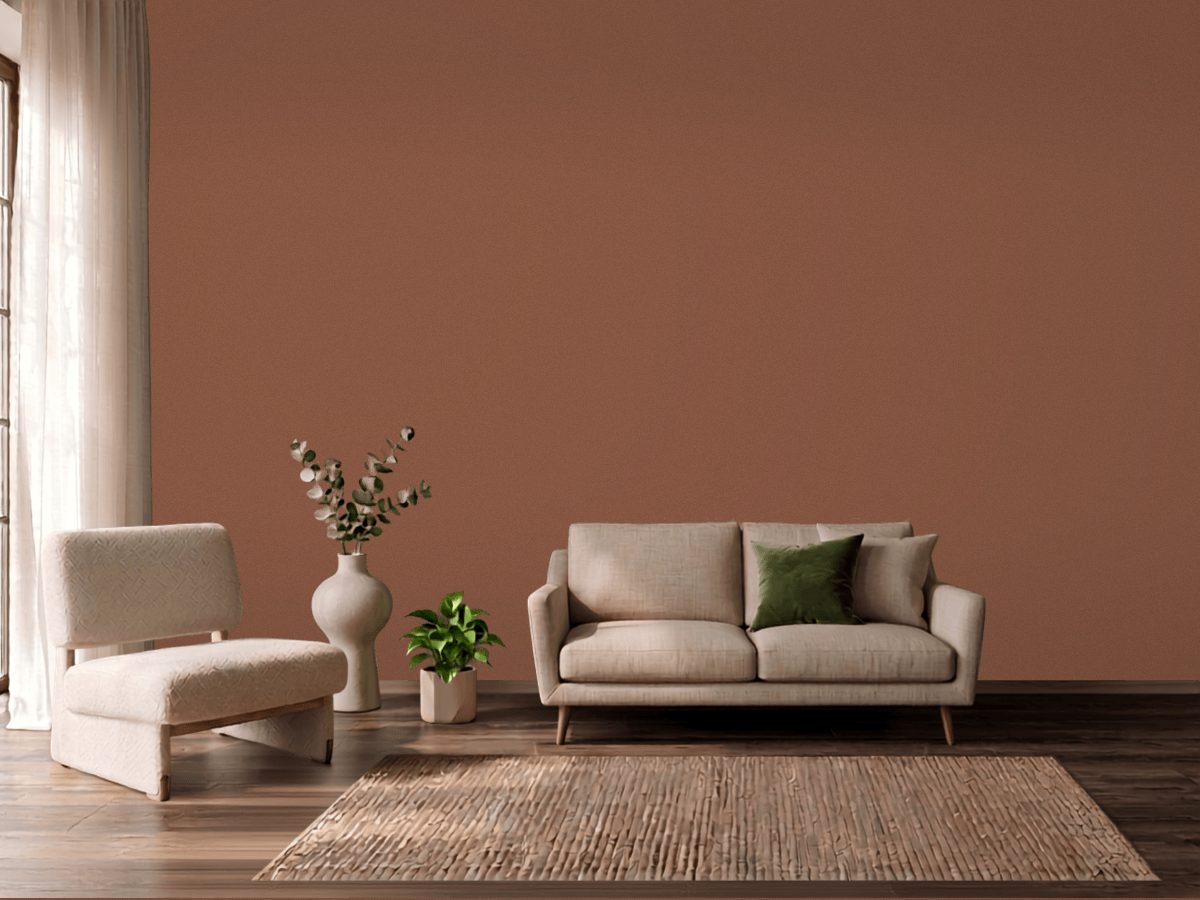
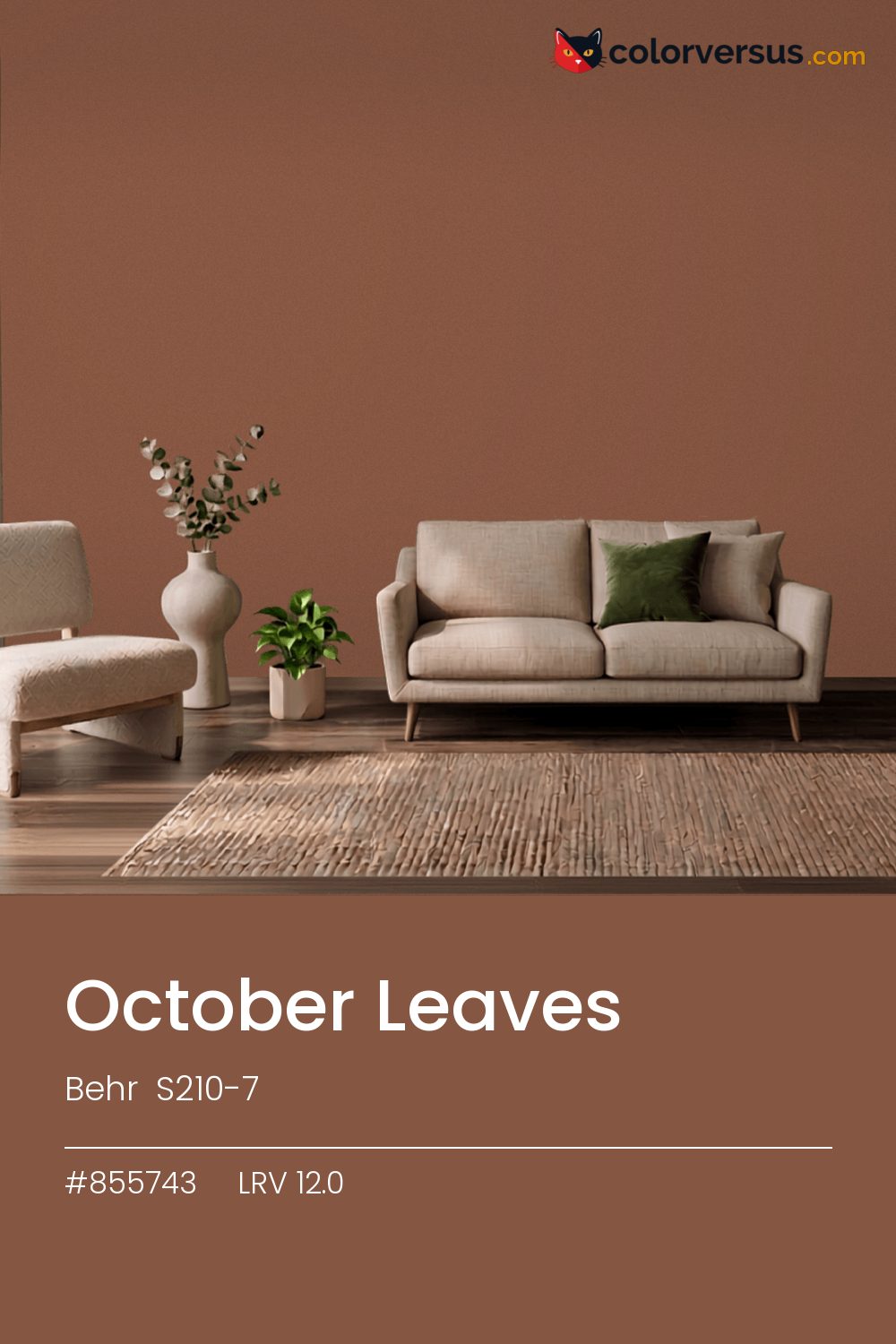
Behr S210-7Behr S210-7
The kind of dark where most people would just call it black without looking twice, though the red is there for anyone who does. Behr catalogs it as October Leaves, S210-7.
At LRV 12.0 the walls stop contributing light altogether and the lamps have to do the work. Under warm light it softens; under daylight bulbs it goes hard and flat, with the red only really visible in the warmer of the two.
In warm light this stays orange; under cooler, daylight-style bulbs it can slide toward red. It's close enough to that edge that a sample is worth checking in the room's own lighting, not under a store's. This color and blues and cool greys don't get along in the same room - they sit on opposite sides of the spectrum, so pairing them tends to feel like tension rather than contrast.
Wood tones next to this read darker and richer than they do against a paler wall; it is one of the more dependable effects of putting a light-absorbing color next to anything reflective. If the room needs more than one wall color, keep the steps far apart: this color, then something clearly lighter for a second surface, then a bright white above. Two similar tones just look like a mismatch; three distinct ones read as a plan (about 12.0 to 49 to 85 in LRV terms).
A single accent wall opposite the main window lets daylight hit it directly, which is where a color this dark actually shows its undertone. Valspar Voyage makes a good second wall color here - different enough to read as a real choice, close enough to still feel related (about 35.4 points apart in light reflectance).
Eggshell can work if the wall is in excellent condition, but matte is the more forgiving default for a color at the bottom of the scale.
Switching brands, Dunn-Edwards Red Hook (DE6091) is the closest equivalent at delta-E 1.78, near enough for most rooms. Only 1 other-brand color land within delta-E 2 of this one, which makes it comparatively unusual.
It is lighter than 11 percent of the Behr range. This is a crowded part of the scale - 368 colors measure within a point of 12.0 - so most brands will have something close. Behr lists it in the S codes, alongside 471 other colors.
Behr October Leaves is a warm color: its hue angle is 49° in CIE Lab at a chroma of 25.5, with a red.
The light reflectance value (LRV) of Behr October Leaves (S210-7) is 12.0, on a scale where 0 is absolute black and 100 is absolute white, which makes it a very dark color.
Measured on the color wheel, Behr October Leaves pairs with Sherwin-Williams Turkish Tile (SW 7610, complement), Benjamin Moore G.I. Green (2149-20, analogous, warmer), Behr July Ruby (BIC-51, analogous, cooler), Valspar Voyage (4006-1B, soft accent).
Behr October Leaves's hex value is #855743, RGB 133, 87, 67.
Behr October Leaves is classified as a orange, with a red.
The nearest Pantone TCX color to Behr October Leaves is 18-1238 TCX Rustic Brown, delta-E 3.75; the nearest RAL Classic is RAL 8002 Signal brown, delta-E 4.14. Neither is an exact match.
The closest cross-brand match to Behr October Leaves is Dunn-Edwards Red Hook (DE6091), at a delta-E of 1.78.
| HEX | #855743 |
| RGB | 133, 87, 67 |
| CMYK | 0%, 35%, 50%, 48% |
| HSL | 18°, 33%, 39% |
| HSV | 18°, 50%, 52% |
| CIE Lab | 41.55, 16.61, 19.39 |
| LCh | 41.55, 25.53, 49.4° |
| XYZ | 14.09, 12.21, 6.92 |
| Pantone (nearest) | 18-1238 TCX Rustic Brown · ΔE 3.75 |
| RAL (nearest) | RAL 8002 Signal brown · ΔE 4.14 |
| 18-1238 TCX Rustic Brown | ΔE 3.75 | |
| 18-1137 TCX Rawhide | ΔE 3.75 | |
| 18-1242 TCX Brown Patina | ΔE 4.03 | |
| RAL 8002 Signal brown | ΔE 4.14 | |
| RAL 8024 Beige brown | ΔE 5.46 |
Pantone TCX and RAL Classic are physical standards; these are their published sRGB approximations, so check a fan deck before specifying. Pantone® and RAL are trademarks of their respective owners.
Shades mix the color toward black, tints toward white. Click any step to find the paint colors closest to it.
One image with October Leaves and its closest color at every other brand, measured by delta-E.
 Luscious LemonBehr HDC-MD-24
 Friendly TanValspar 2008-8A
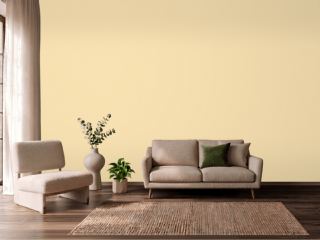 Banana CreamSherwin-Williams SW 6673
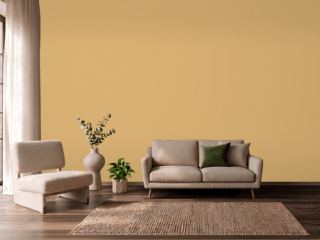 Tavern OchreBenjamin Moore CW-375
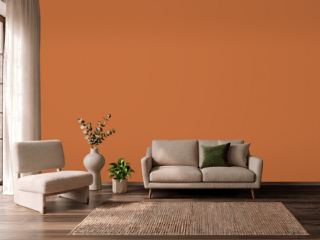 YamSherwin-Williams SW 6643
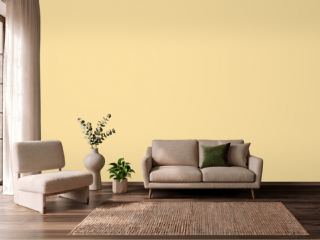 SoléSherwin-Williams SW 6896
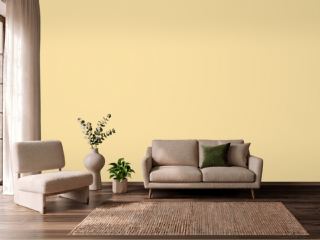 Butter UpSherwin-Williams SW 6681
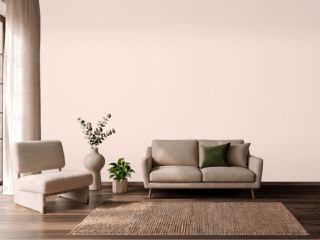 Champagne PinkValspar 2004-4C
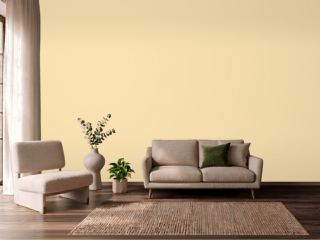 PastaDunn-Edwards DE5331
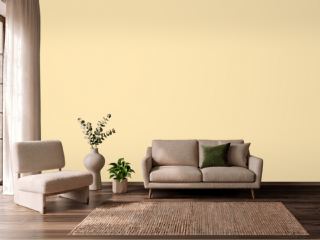 They call it MellowSherwin-Williams SW 9015
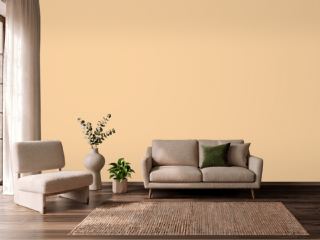 GranolaDunn-Edwards DE5296
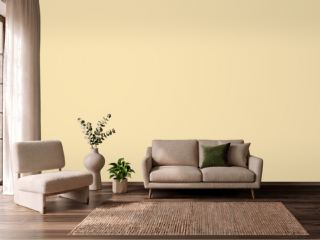 Friendly YellowSherwin-Williams SW 6680
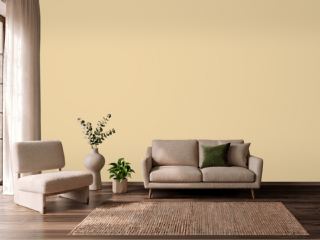 Dorset CreamFarrow & Ball 68
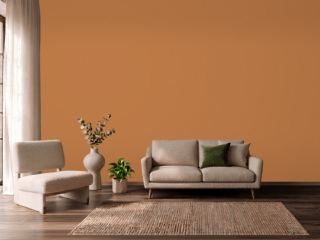 PumpkinVista Paint 1335
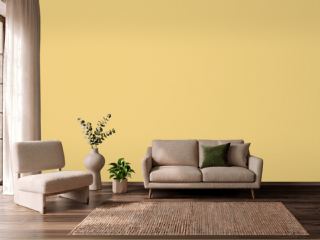 CitronFarrow & Ball 74
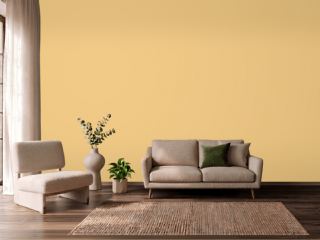 Ivory WhiteDutch Boy D-6722